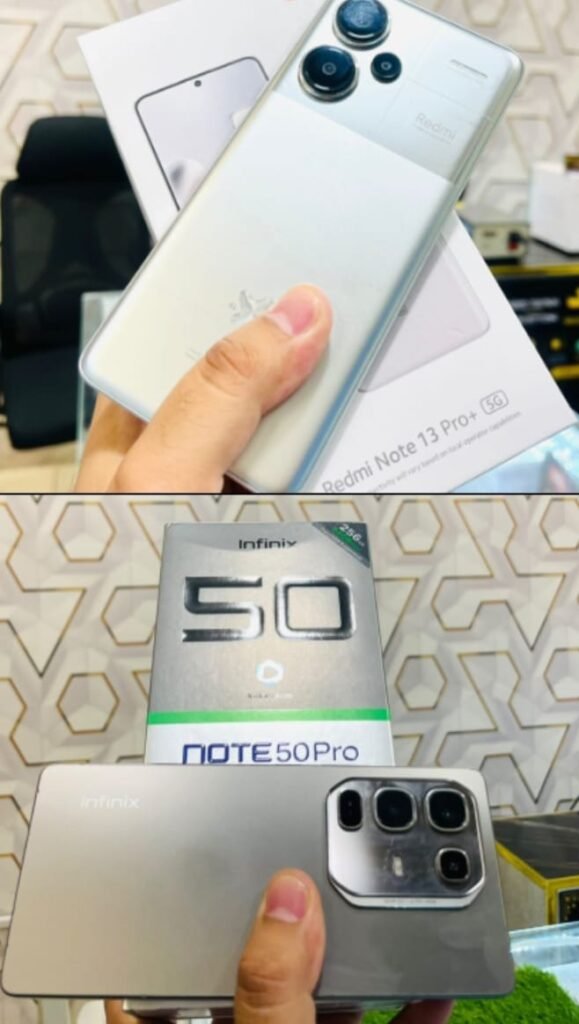
Infinix Note 50 Pro vs Redmi Note 13 Pro Plus Gaming Comparison
Choosing a smartphone for gaming is not only about RAM. The processor, GPU, display refresh rate, storage speed, cooling system, battery, and charging technology all affect the gaming experience.
The Infinix Note 50 Pro and Redmi Note 13 Pro+ 5G are two smartphones that offer strong specifications, but they approach performance differently. The Infinix Note 50 Pro focuses on a high-refresh-rate AMOLED display, large battery, fast charging, and the MediaTek Helio G100 Ultimate chipset. The Redmi Note 13 Pro+ 5G takes a more performance-oriented approach with the MediaTek Dimensity 7200-Ultra, LPDDR5 RAM, UFS 3.1 storage, 120Hz AMOLED display, and 120W charging.
For Pakistani users interested in PUBG Mobile, Call of Duty Mobile, Free Fire, and other demanding Android games, the important question is simple:
Which phone is better for gaming — Infinix Note 50 Pro or Redmi Note 13 Pro+ 5G?
Based on the hardware specifications, the Redmi Note 13 Pro+ 5G is the stronger choice for gaming performance, while the Infinix Note 50 Pro remains attractive for users who want a smooth 144Hz display, large battery, and fast charging at a lower price point.
Infinix Note 50 Pro vs Redmi Note 13 Pro+ Specifications
| Feature | Infinix Note 50 Pro | Redmi Note 13 Pro+ 5G |
|---|---|---|
| Processor | MediaTek Helio G100 Ultimate | MediaTek Dimensity 7200-Ultra |
| Process | 6nm | 4nm |
| GPU | Mali-G57 MC2 | Mali-G610 |
| RAM | 8GB / 12GB | 8GB / 12GB / 16GB depending on variant |
| Storage | 256GB UFS 2.2 | 256GB / 512GB UFS 3.1 |
| Display | 6.78-inch AMOLED | 6.67-inch AMOLED |
| Resolution | 1080 × 2436 | 1220 × 2712 |
| Refresh Rate | 144Hz | 120Hz |
| Battery | 5,200mAh | 5,000mAh |
| Charging | 90W | 120W HyperCharge |
| Network | 4G | 5G |
| Cooling | Performance-oriented internal design | Vapor-chamber cooling system |
| Main Camera | 50MP OIS + 8MP ultrawide | 200MP OIS + ultrawide + macro |
| Software | Android 15 / XOS 15 | Android / HyperOS |
| Gaming Winner | — | Redmi Note 13 Pro+ 5G |
The Infinix Note 50 Pro uses the Helio G100 Ultimate, Mali-G57 MC2 GPU, 12GB RAM and 256GB UFS 2.2 storage in its commonly listed configuration. It also has a 6.78-inch 144Hz AMOLED display and 5,200mAh battery.
The Redmi Note 13 Pro+ 5G uses the 4nm Dimensity 7200-Ultra platform, Mali-G610 GPU, LPDDR5 RAM and UFS 3.1 storage. Xiaomi lists a 5,000mAh battery and 120W HyperCharge support.
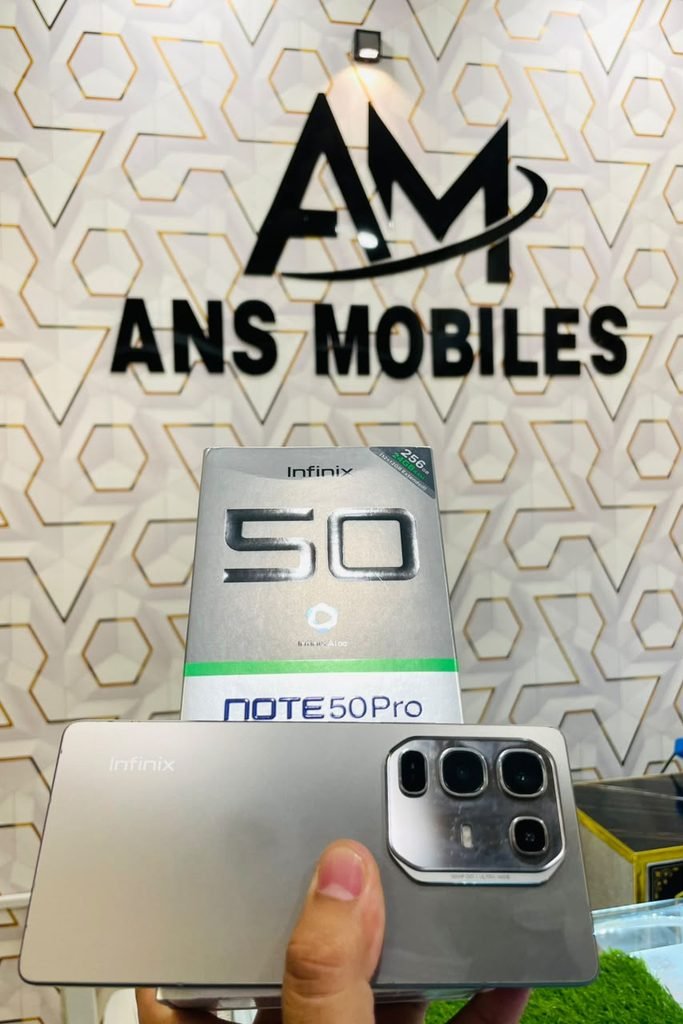
if you like this infinix phone you can visit official website of infinix
1. Processor Performance
The processor is the most important component when comparing gaming performance.
The Infinix Note 50 Pro uses the MediaTek Helio G100 Ultimate, a 6nm chipset with an octa-core CPU and Mali-G57 MC2 GPU.
The Redmi Note 13 Pro+ 5G uses the MediaTek Dimensity 7200-Ultra, built on a 4nm process. It is paired with the Mali-G610 GPU.
This gives the Redmi a significant hardware advantage.
The Dimensity 7200-Ultra is designed for a higher performance class than the Helio G100 Ultimate. Its newer architecture, smaller manufacturing process, stronger GPU, and faster memory/storage combination make it better suited to demanding games.
Winner: Redmi Note 13 Pro+ 5G 🏆
For gaming performance, the Redmi takes the lead.
2. GPU and Gaming Graphics
A powerful GPU is essential for rendering game graphics smoothly.
The Infinix Note 50 Pro uses the Mali-G57 MC2, while the Redmi Note 13 Pro+ uses the Mali-G610.
The Redmi’s GPU is better suited to demanding 3D games and higher graphical workloads.
This doesn’t mean that the Infinix Note 50 Pro cannot run popular games. It can handle everyday gaming and less demanding titles well. However, gamers who want higher graphics settings and stronger sustained performance should prefer the Redmi.
Winner: Redmi Note 13 Pro+ 5G 🏆
3. PUBG Mobile Performance
PUBG Mobile is one of the most important games for smartphone buyers in Pakistan.
The Infinix Note 50 Pro can provide a good PUBG Mobile experience when appropriate graphics and frame-rate settings are selected. Its large AMOLED display and 144Hz panel make menus, scrolling, and supported high-frame-rate content feel smooth.
However, the higher-end chipset in the Redmi Note 13 Pro+ gives it more performance headroom.
The Dimensity 7200-Ultra, Mali-G610 GPU, LPDDR5 memory and UFS 3.1 storage give the Redmi a stronger foundation for demanding games.
It is important not to treat a phone’s maximum display refresh rate as its guaranteed gaming FPS. A 144Hz display does not automatically mean that PUBG will run at 144 FPS.
Actual FPS depends on the game’s supported settings, software version, thermal conditions, and the graphics/frame-rate combination selected by the user.
PUBG winner: Redmi Note 13 Pro+ 5G 🏆
4. Call of Duty Mobile and Other Games
The same hardware difference becomes important in other demanding games.
Games such as Call of Duty Mobile, Genshin Impact, Asphalt, and other graphics-heavy titles put more pressure on the CPU and GPU.
The Infinix Note 50 Pro is suitable for casual and moderate gaming, but the Redmi’s Dimensity 7200-Ultra provides a stronger performance platform for demanding titles.
The Redmi’s faster UFS 3.1 storage can also help with application and game loading compared with the Infinix’s UFS 2.2 storage.
Winner: Redmi Note 13 Pro+ 5G 🏆
5. Display: 144Hz vs 120Hz
This is where the Infinix Note 50 Pro fights back.
The Infinix features a 6.78-inch AMOLED display with a 144Hz refresh rate, while the Redmi has a 6.67-inch AMOLED display with a 120Hz refresh rate.
On paper, the Infinix has the higher refresh rate.
A higher refresh rate can make supported animations, scrolling, and compatible games appear smoother. However, the difference between 120Hz and 144Hz is not necessarily as important as the difference in processor and GPU performance.
The Redmi also has a higher 1.5K-class resolution, which gives it an advantage for image sharpness and overall display quality.
Display refresh-rate winner: Infinix Note 50 Pro 🏆
Overall display quality: Redmi Note 13 Pro+ 5G 🏆
6. RAM and Storage
RAM helps with multitasking, while storage speed can influence application loading and responsiveness.
The Infinix Note 50 Pro is available with 8GB or 12GB RAM configurations, with 256GB storage listed for the device. Its storage is UFS 2.2.
The Redmi Note 13 Pro+ offers configurations including 8GB, 12GB and 16GB RAM, with 256GB and 512GB storage options depending on market and variant. It uses faster UFS 3.1 storage.
For a gaming phone, having faster storage is useful because modern games can be very large and frequently load substantial amounts of data.
Winner: Redmi Note 13 Pro+ 5G 🏆
7. Cooling and Sustained Gaming
Gaming performance is not only about peak performance. A phone also needs to manage heat during longer gaming sessions.
The Redmi Note 13 Pro+ 5G includes a large vapor-chamber cooling system designed to help manage heat during demanding workloads.
This is particularly useful for users who regularly play long sessions of PUBG Mobile or other demanding games.
The Infinix Note 50 Pro is also designed around performance and includes a capable hardware platform for everyday gaming, but the Redmi has the stronger overall performance hardware and cooling approach.
Winner: Redmi Note 13 Pro+ 5G 🏆
8. Battery Life
The Infinix Note 50 Pro has a 5,200mAh battery, while the Redmi Note 13 Pro+ has a 5,000mAh battery.
The Infinix therefore has a slightly larger battery capacity.
For long gaming sessions, battery capacity matters, but actual battery life depends on screen brightness, network connection, game settings, temperature, and processor workload.
The 144Hz display on the Infinix can also affect power consumption when the higher refresh rate is active.
Battery-capacity winner: Infinix Note 50 Pro 🏆
9. Charging Speed
The Redmi Note 13 Pro+ has a major advantage in charging.
It supports 120W HyperCharge, while the Infinix Note 50 Pro supports 90W charging.
Both are fast-charging phones, but Redmi’s 120W system provides the higher charging specification.
For gamers who frequently forget to charge their phone before playing, fast charging can be particularly useful.
Winner: Redmi Note 13 Pro+ 5G 🏆
10. Gaming FPS: What Should You Expect?
One common mistake when comparing gaming phones is publishing a single FPS number without explaining the conditions.
The actual FPS on both phones can change according to:
- Game version
- Graphics settings
- Frame-rate settings
- Phone temperature
- Battery level
- Background applications
- Software updates
- Network conditions
The Infinix Note 50 Pro’s 144Hz screen does not mean every game will run at 144 FPS.
Likewise, the Redmi Note 13 Pro+’s 120Hz display does not guarantee 120 FPS in every game.
For ANSMobile readers, the more useful conclusion is that the Redmi Note 13 Pro+ has significantly more gaming performance headroom, while the Infinix Note 50 Pro is better positioned for users who prioritize a high-refresh-rate display and battery capacity.
11. Which Phone Is Better for PUBG?
If PUBG Mobile is your main game, the Redmi Note 13 Pro+ 5G is the better choice.
Its Dimensity 7200-Ultra chipset, Mali-G610 GPU, LPDDR5 RAM, UFS 3.1 storage, and cooling hardware give it a stronger gaming foundation.
The Infinix Note 50 Pro is still capable for casual PUBG players, especially those who value its large 144Hz AMOLED display.
But for a gamer who wants more performance headroom, Redmi is the safer choice.
12. Which Phone Has the Better Gaming Display?
This comparison is closer.
The Infinix Note 50 Pro has the higher 144Hz refresh rate, while the Redmi Note 13 Pro+ has a sharper 1.5K AMOLED panel with 120Hz refresh rate.
If your only priority is refresh rate, Infinix wins.
If you care about the complete display experience, including resolution and overall visual quality, Redmi has the stronger package.
Display winner: Redmi Note 13 Pro+ 5G
13. Which Phone Is Better for Long Gaming Sessions?
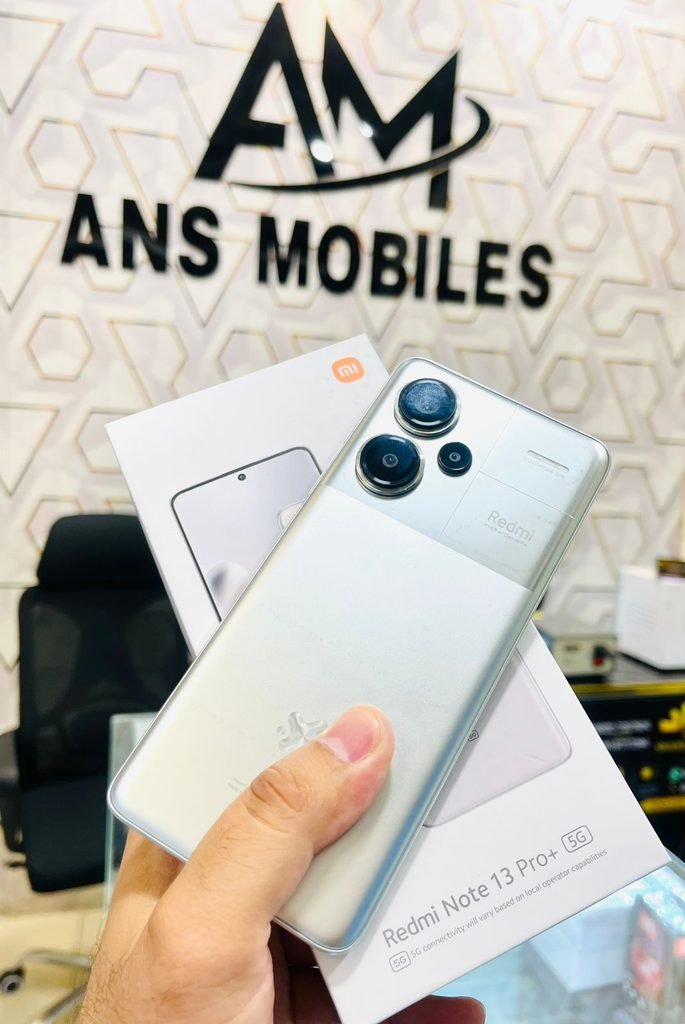
For long gaming sessions, the Redmi Note 13 Pro+ is the better overall choice because of its stronger chipset, GPU, faster storage, and cooling solution.
The Infinix has a slightly larger battery, which is an advantage, but raw battery capacity is only one part of gaming endurance.
Long-session gaming winner: Redmi Note 13 Pro+ 5G 🏆
Infinix Note 50 Pro Pros and Cons
Pros
- 144Hz AMOLED display
- 5,200mAh battery
- 90W fast charging
- 12GB RAM option
- 256GB storage
- Helio G100 Ultimate chipset
- 50MP OIS main camera
- Attractive design
- Good everyday gaming experience
Cons
- 4G rather than 5G
- UFS 2.2 storage
- GPU is weaker than Redmi’s
- Not the best option for heavy gaming
- 144Hz display does not guarantee 144 FPS in games
Redmi Note 13 Pro+ 5G Pros and Cons
Pros
- Powerful Dimensity 7200-Ultra processor
- Mali-G610 GPU
- LPDDR5 RAM
- UFS 3.1 storage
- 120Hz AMOLED display
- 1.5K resolution
- 120W HyperCharge
- 5G connectivity
- Stronger gaming performance
- Vapor-chamber cooling
- 5,000mAh battery
Cons
- Higher price than the Infinix Note 50 Pro
- 120Hz refresh rate is lower than Infinix’s 144Hz
- Gaming performance can still vary according to game settings and temperature
- Older model compared with some newer Redmi Note generations
Infinix Note 50 Pro vs Redmi Note 13 Pro Plus: Final Verdict
The Redmi Note 13 Pro+ 5G is the clear winner for gaming.
The Infinix Note 50 Pro has several attractive features, especially its 144Hz AMOLED display, 5,200mAh battery and 90W charging. It is a good option for users who want a stylish phone with a smooth display and capable everyday performance.
However, gaming requires more than a high refresh rate.
The Redmi Note 13 Pro+ combines the Dimensity 7200-Ultra, Mali-G610 GPU, LPDDR5 RAM, UFS 3.1 storage and vapor-chamber cooling, giving it a stronger foundation for demanding games.
Therefore, if your priority is PUBG Mobile, Call of Duty Mobile, demanding games and longer gaming sessions, the Redmi Note 13 Pro+ is the phone I would choose.
If your priority is a 144Hz AMOLED display, large battery, fast charging and a lower price, the Infinix Note 50 Pro remains a compelling alternative.
🏆 Overall Gaming Winner: Redmi Note 13 Pro+ 5G
| Category | Winner |
|---|---|
| Processor | Redmi Note 13 Pro+ |
| GPU | Redmi Note 13 Pro+ |
| PUBG/Gaming Performance | Redmi Note 13 Pro+ |
| RAM/Storage Speed | Redmi Note 13 Pro+ |
| Display Refresh Rate | Infinix Note 50 Pro |
| Display Resolution | Redmi Note 13 Pro+ |
| Battery Capacity | Infinix Note 50 Pro |
| Charging | Redmi Note 13 Pro+ |
| 5G | Redmi Note 13 Pro+ |
| Long Gaming Sessions | Redmi Note 13 Pro+ |
| Overall Gaming | Redmi Note 13 Pro+ 🏆 |
Frequently Asked Questions
Is Infinix Note 50 Pro good for gaming?
Yes. The Infinix Note 50 Pro offers the Helio G100 Ultimate chipset, 12GB RAM configuration, 144Hz AMOLED display and 5,200mAh battery, making it capable for everyday and moderate gaming.
Is Redmi Note 13 Pro+ good for gaming?
Yes. The Redmi Note 13 Pro+ is particularly strong for gaming because of its Dimensity 7200-Ultra processor, Mali-G610 GPU, LPDDR5 RAM, UFS 3.1 storage and cooling system.
Which is better for PUBG, Infinix Note 50 Pro or Redmi Note 13 Pro+?
The Redmi Note 13 Pro+ 5G is the better choice for PUBG because its processor and GPU provide more performance headroom.
Does Infinix Note 50 Pro support 144 FPS gaming?
The phone has a 144Hz display, but a 144Hz screen does not guarantee that every game will support or run at 144 FPS. Actual FPS depends on the game’s settings, software version and device conditions.
Which phone has better charging?
The Redmi Note 13 Pro+ supports 120W HyperCharge, compared with 90W charging on the Infinix Note 50 Pro.
Which phone has a better battery?
The Infinix Note 50 Pro has the larger battery on paper at 5,200mAh, compared with the Redmi Note 13 Pro+’s 5,000mAh battery.
Which phone should gamers buy?
For gaming performance, the Redmi Note 13 Pro+ 5G is the better choice. For users who want a 144Hz display, 5,200mAh battery and lower-priced alternative, the Infinix Note 50 Pro is worth considering.
if you like this article you can visit other article on our website